T-shirt labels and care tags: what is mandatory and what is optional
A label is a small piece of fabric costing less than one per cent of a t-shirt, and yet it is among the most common reasons a shipment stops at customs. Most markets treat the information on a label as consumer protection rather than product decoration.
What must the label carry legally?
- Fibre composition with percentages: such as 100% cotton, or 65% polyester and 35% cotton. The declared percentage must actually be true, and it is laboratory-tested when questioned.
- Country of origin: Made in China, in a clear form that cannot be removed.
- Care instructions: washing, bleaching, drying, ironing and dry cleaning, written in the recognised standard symbols, and in some markets in text as well.
- The size.
- Importer or responsible company details: required in a number of markets, sometimes in the local language.
Language requirements in particular differ from market to market. Check your market's requirements before designing the label, not after the shipment arrives, because changing a label after production means re-sewing every piece or writing off the whole quantity.
Label types
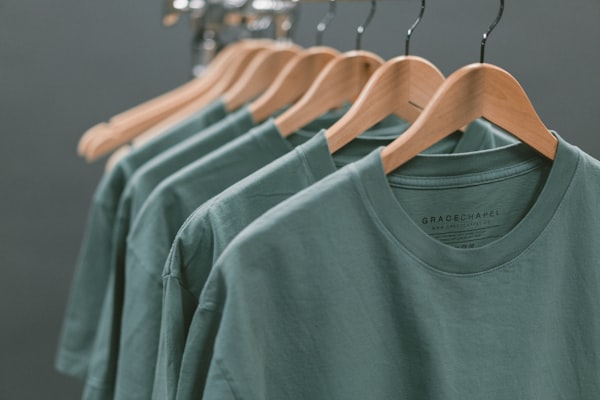
- Woven: the name is woven into the fabric rather than printed on it. The most premium in appearance and the longest lasting, with its own minimum, usually 500 to 1,000 pieces.
- Printed satin: cheaper and faster with a lower minimum, but it can fade with repeated washing and can feel rougher against the skin.
- Direct neck print: removes the label entirely and is more comfortable, and it is the dominant trend in contemporary tees. It needs a high-durability print, because care information must stay legible for the life of the garment, which is a legal requirement in some markets.
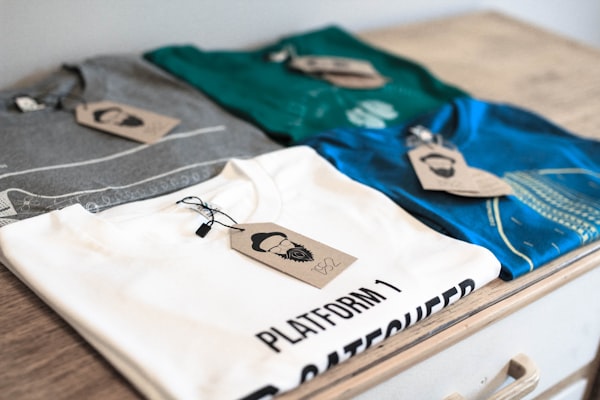
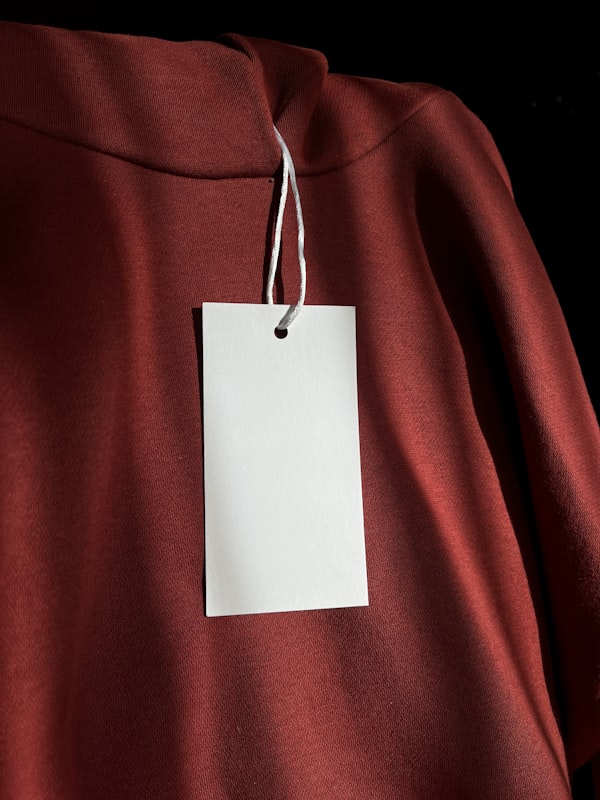
- Hang tag: a card tag attached for display and removed before wear. It carries the logo, price and barcode, and it is not a substitute for the internal label.
Barcodes and product codes
If you will sell through organised retail or on e-commerce platforms, you will need a barcode for every combination of model, colour and size. Ask the factory to print it on the hang tag or on the poly bag sticker, and send the number file early, because any error in it means reprinting every label.
Minimums and how to manage them
A woven label has a minimum independent of the t-shirt minimum, and its unit price falls sharply with quantity. It therefore makes sense on a first order to buy enough labels for the next three orders: they do not spoil in storage, and the price gap between one thousand and three thousand is large. The exception is if you are about to change your name or logo.
Mistakes that stop shipments
The most common: a fibre percentage on the label that contradicts the actual composition; a missing country of origin; non-standard care symbols; a label in a language the market does not accept; and a size label contradicting the attached measurement chart. Each looks like a small detail and ends in daily storage charges or an outright rejection.
Frequently asked questions
Can I order a label with no brand name? Yes, a care-only label, common for sellers who do not yet have a brand.
Is a neck print legally sufficient? In most markets yes, provided it stays legible for the life of the garment, but check your own market.
How long do labels take? Ten to fifteen days, produced in parallel with the fabric, so order them early or they will delay sewing.
We handle label design, production and compliance with your market's requirements before sewing begins.
More articles