T-shirt fabric types: cotton, polyester and blends, and how to choose
Fabric is the largest single line in the cost of a t-shirt, and it decides more than anything else how the finished product feels in the customer's hand. The wrong fabric cannot be rescued later by good printing or nice packaging. This guide covers the constructions Chinese factories actually run, and where each belongs.
What is the difference between combed and carded cotton?
Carded cotton is cotton that has been cleaned and lightly aligned. Short fibres remain and work their way out of the yarn surface, which gives a less smooth hand and a stronger tendency to pill after washing. Combed cotton goes through an extra stage that removes the short fibres and keeps only the long ones. The result is a smoother, stronger yarn, a cleaner surface that accepts fine printing, and a longer life. The price gap is usually 12% to 20%, and it is often the best upgrade you can buy.
Open-end versus ring-spun yarn
Open-end yarn is cheaper and faster to produce, and its yarn is coarser and more uniform. Ring-spun yarn twists the fibres around each other, producing a softer, stronger and lighter-feeling yarn. Most cheap promotional t-shirts are open-end; most retail t-shirts are ring-spun.
Common knit constructions
- Single jersey: the standard t-shirt knit. Smooth face, looped back. Common weights run from 140 to 220 grams per square metre.
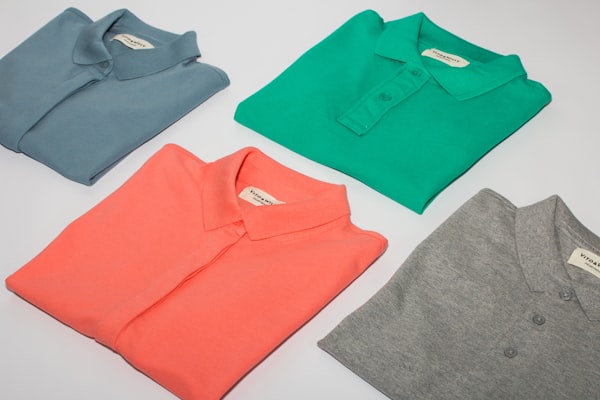
- Pique: a raised textured knit, traditional for polo shirts. It breathes well and hides creasing.
- Interlock: heavier and more stable, identical on both faces. Used for premium tees and childrenswear.
- French terry: looped inside without brushing. Used for heavyweight tees and lightweight hoodies.
- Slub: a deliberately uneven yarn that gives a visibly textured surface, popular in oversized cuts.
Polyester and blends
One hundred per cent polyester is lighter, dries fast, barely shrinks, and takes full-colour sublimation printing. Its weakness is breathability, and it can hold odour. The most common blend is 65% polyester with 35% cotton, combining dimensional stability with cotton comfort. A blend of 50 cotton, 25 polyester and 25 rayon gives a very soft hand and a fluid drape, and is favoured in fashion-led tees.
What does the GSM weight actually tell you?
Weight is the fastest way to understand a fabric. Under 150 grams: very light, suited to hot climates and promotional orders, but it can read as semi-transparent in pale colours. From 160 to 190: the most common range for everyday retail. From 200 to 240: a heavy tee that holds its own shape, favoured for oversized cuts and upper-mid brands. Above 250: the very heavy range, expensive and slow to dry after washing.
Which fabric suits my market?
Hot and humid markets: combed cotton at 160 to 180 grams, or a light cotton-polyester blend. Temperate markets and general retail: ring-spun combed cotton at 180 grams. Brands selling at a higher price point: 200 to 220 grams combed, or French terry. Sports teams: polyester, or a blend with elastane for stretch.
Frequently asked questions
Is organic cotton worth the premium? It is if your market reads certificates and pays for them. The cost difference is typically 20% to 35%, and it should come with a valid certificate rather than a verbal claim.
How much does cotton shrink? Untreated cotton shrinks 3% to 5%. Ask for pre-shrunk fabric and fix the permitted shrinkage after three washes in the contract.
How do I verify the actual weight? By cutting a standard circle of fabric and weighing it on a precision scale. Pre-shipment inspection normally includes this test.
We can send you physical fabric swatches in several weights before you commit to any order.
More articles