SOURCE OFSHIRT
Start importing
Embroidery or printing? How to choose the right method for your logo
← Back to the blog

Embroidery or printing? How to choose the right method for your logo

When a garment carries a logo, the importer faces two decisions rather than one: how it is executed and where it sits. The method is decided by four factors: the complexity of the logo, its size, the fabric, and the quantity. And a wrong decision does not show in the sample; it shows months into use.

How is each priced?

Embroidery is priced by stitch count, not by area. A setup fee is paid once to digitise the logo into an embroidery file, then execution is charged by stitch count per piece. A small simple logo is cheap; a logo with gradients or large solid areas jumps in price because the stitch count multiplies.

Screen printing is priced by colour count: a fixed setup per screen, then a small running cost per piece. Area barely matters; the number of colours governs.

The practical consequence: on small logos at moderate quantities the two can converge. On large designs, printing is far cheaper. On very small runs, embroidery can be cheaper because its setup costs less than several screens.

Lifespan and durability

Embroidery wins outright. The thread is stitched into the fabric rather than laid on its surface, so it cannot crack, fade or wash off. An embroidered garment wears out before its embroidery does. Screen printing is very good and passes fifty washes, but it remains a surface layer exposed to cracking under hard wear, particularly across large solid areas.

Fabric sometimes decides

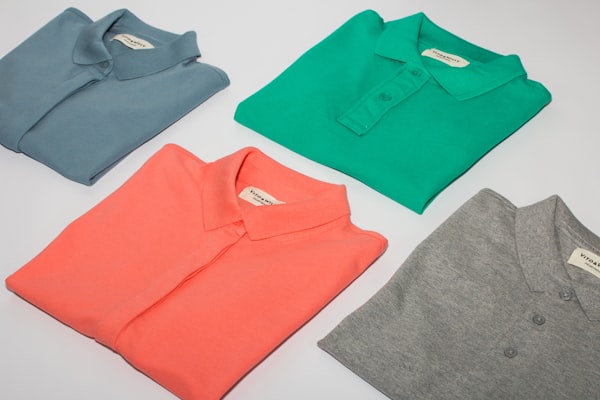
  • Pique: its surface is uneven, so large heat transfers break up. Embroidery is the natural choice on polos.
  • Cotton jersey: accepts either method without difficulty.
  • Light performance fabrics: embroidery adds local stiffness and weight and perforates the fabric, and can restrict its stretch. Sublimation or a light print suits better.
  • Elastane stretch fabrics: embroidery is difficult because the fabric stretches and distorts the shape. It needs backing that adds stiffness.

Hand feel and appearance

Embroidery gives relief, texture and an immediate impression of quality, which is why it dominates uniforms, polos and corporate caps. But it is limited on fine detail: very small text comes out illegible and gradients cannot be executed. Printing gives fine detail, unlimited colour, gradients and photographs, with a flat hand.

Placement and size

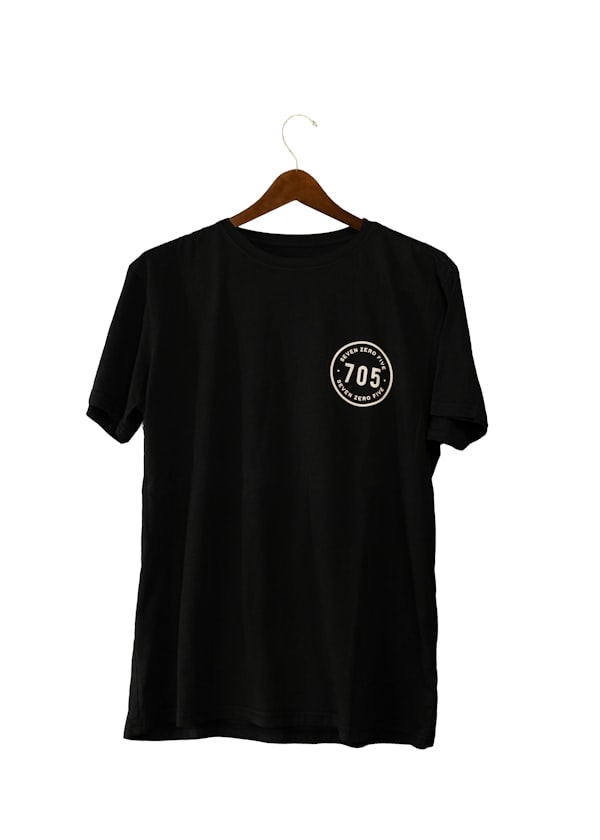
Embroidery suits the left chest, the sleeve and the back at small to medium sizes. Large embroidered areas are heavy, expensive, stiff and uncomfortable. Printing suits every size from a small logo to full coverage. Specify placement in centimetres from the neck seam and from the chest centre, and ask for an approved placement diagram with the production sample.

The practical decision rule

  • Small logo on a polo or uniform: embroidery.
  • Large one or two colour design on a tee above 300 pieces: screen printing.
  • Multi-colour design or a photograph: digital printing or film transfer.
  • Light performance fabric with full coverage: sublimation.
  • A common practical mix: embroidered logo on the chest, printed text on the back.

Frequently asked questions

Do I pay setup every time? No. The embroidery file and the screens are kept for reorders; ask for that in writing.

How many colours can embroidery take? Practically six to eight thread colours, and each one adds run time.

Does embroidery show inside? Yes, which is why backing is added. On childrenswear ask for a soft cover so it does not scratch the skin.

We help you choose the right method for your logo, fabric and quantity, and send an executed sample before production.

More articles
Reordering and scaling: from five hundred pieces to ten thousand
Read the article →
Fabric testing and lab reports: what to request and how to read them
Read the article →
What gets checked before the container leaves the factory?
Read the article →
What does it cost to start a t-shirt brand? A realistic line-by-line budget
Read the article →
How is your true cost per piece calculated?
Read the article →
A guide to fabric weight: what does GSM actually mean?
Read the article →
Common t-shirt defects and the AQL inspection standard
Read the article →
Twelve mistakes new t-shirt importers make
Read the article →
Sustainability in t-shirt manufacturing: what the certifications actually mean
Read the article →
T-shirt production timeline: how long each stage takes and why orders slip
Read the article →
Customs and HS codes for t-shirts imported from China
Read the article →
Safe payment terms when importing from China
Read the article →
Export packaging for t-shirts: bags, cartons, labels and shipping volume
Read the article →
T-shirt labels and care tags: what is mandatory and what is optional
Read the article →
Dyeing and colour matching: Pantone, dye lots and colour fastness
Read the article →
Cotton grades and origins: Pima, Supima, Egyptian and standard cotton
Read the article →
Workwear and uniform t-shirts: durability, customisation and reordering
Read the article →
Wholesale kids t-shirt manufacturing: safety, sizing and standards
Read the article →
Polo shirt manufacturing in China: pique, collars, buttons and the full specification
Read the article →
The oversized t-shirt: fit, fabric, sizing and how to order it from China
Read the article →
A worked example: the cost of 1,000 t-shirts from factory to your warehouse
Read the article →
Where are t-shirts made in China? Guangzhou, Yiwu, Dongguan and Shenzhen
Read the article →
Promotional and event t-shirts: how to plan a wholesale order that works
Read the article →
Wholesale sports t-shirts: performance fabrics and how to choose them
Read the article →
From sample to production: t-shirt sample types and their timeline
Read the article →
How to verify a Chinese t-shirt factory before you pay
Read the article →
T-shirt sizing and fit: Asian, European and US size charts explained
Read the article →
Shipping t-shirts from China: sea, air, Incoterms and customs
Read the article →
How to build your own private-label t-shirt brand from China
Read the article →
T-shirt printing methods compared: screen, DTG, DTF, sublimation and embroidery
Read the article →
T-shirt fabric types: cotton, polyester and blends, and how to choose
Read the article →
How to import t-shirts from China: a complete step-by-step guide
Read the article →

Everything you need in t-shirts, from one source

Fabric, fit and sizing, printing and embroidery, labelling and packing, and shipping to your port.

Request a quote

This website is a service of:

Guangzhou Alshumul Trade Consulting Co., Ltd.
广州睿全贸易咨询有限公司

Unified Social Credit Code (business registration number)
91440106MAKJR3AP46
Registered in
Tianhe District, Guangzhou, Guangdong, P.R. China
Phone
+86 177 0200 0155
Address
中国广东省广州市天河区天河北路179号904房N14
Unit N14, 904, No. 179 Tianhe North Road, Tianhe District, Guangzhou 510620, Guangdong, China

Registration can be verified through National Enterprise Credit Information Publicity System