Promotional and event t-shirts: how to plan a wholesale order that works
A promotional t-shirt differs from a retail one in a single decisive constraint: the delivery date is not negotiable. The exhibition has a date, the campaign has a launch, and the event will not be postponed because a container is late. So a promotional order is built backwards from the date, not forwards from the price.
Start from the date, not the price
Count backwards from the event: a buffer week for internal distribution, then 2 to 5 days of customs clearance, then 18 to 35 days of sea freight, then 20 to 35 days of production, then 10 to 15 days of sampling. The total is two to three months. If you have less than that, you have exactly two options: air freight, or a smaller quantity with a simpler design.
How many pieces should you order?
The practical rule for events: expected attendance multiplied by the real collection rate, which is usually 60% to 80% for free distribution. Add 10% for damage and late requests. Do not order for full attendance; surplus promotional t-shirts become stock that is neither sold nor used.
Size distribution
The common distribution for general handouts weights the middle sizes: a small share for the smallest size, large shares for medium and large, then declining shares for the bigger sizes. If the audience is known in advance, collect sizes on a registration form before ordering; that simple step typically saves the equivalent of 15% of the order.
The right fabric for promotional orders
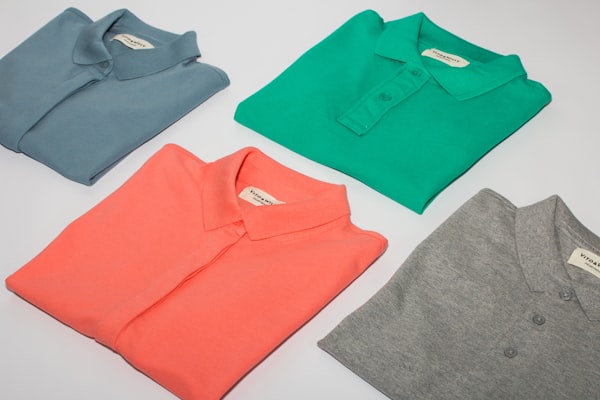
Top quality is not needed here, but going too far down damages the very impression you paid for. The practical range is 150 to 175 grams in combed cotton or a blend. Below 140 grams the fabric reads as semi-transparent in pale colours and its cheapness is immediately visible, which is the worst thing that can happen to a shirt carrying your company logo. Remember that a good promotional t-shirt is an advertisement walking around for a year or more, while a poor one is discarded after two washes.
Printing and colours
Keep the colour count down: in screen printing every colour is a separate screen and a separate setup charge. A one or two colour logo on a large quantity is the cheapest possible combination. If the logo is multi-coloured and detailed, DTF is the better route. Name a reference Pantone in the contract, especially where the brand colour is part of your identity, and never rely on a colour described in words.
Packing and distribution
If you will hand the shirts out at the venue, ask for pre-sorting by size into separate, clearly marked cartons. Sorting ten mixed cartons on the day of the event is a real problem. An individual bag per piece looks like a small detail, but it makes distribution faster and keeps the garments clean.
Frequently asked questions
What is the minimum order? Usually 100 to 300 pieces per colour and model. Smaller runs are possible with DTF printing, but the unit cost rises.
Should I order several colours? Every fabric colour is a separate dye lot with its own minimum. Two colours is the practical balance for most events.
Can part of the order be delivered early? Yes, by air-freighting a portion for the event and shipping the rest by sea, which is a common approach when time is short.
We supply wholesale promotional and event t-shirts from China with your logo printed, pre-sorted by size, and a delivery schedule tied to your event date.
More articles