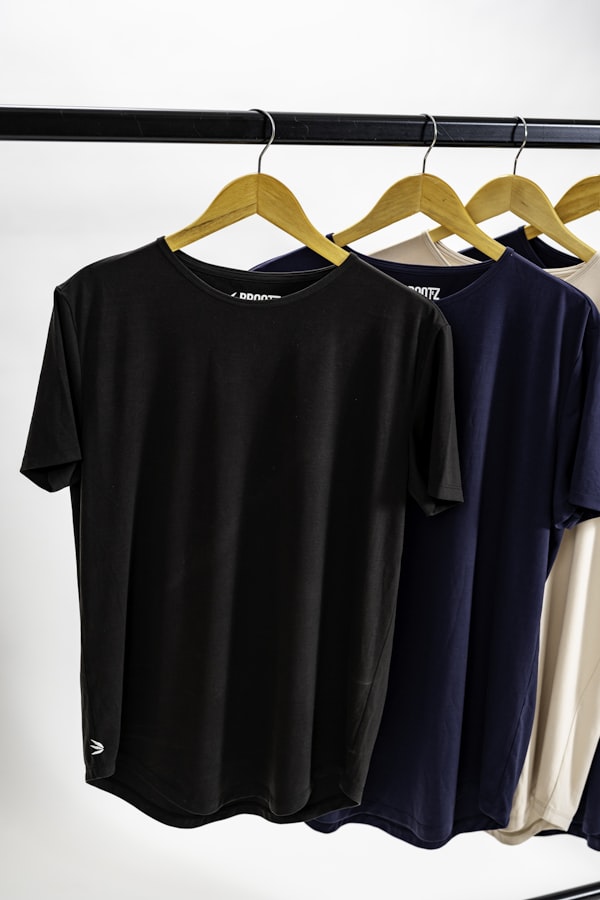
Shipping t-shirts from China: sea, air, Incoterms and customs
Freight is the line that surprises most new importers, because it is priced on a different logic from the goods themselves. Understanding that logic saves a meaningful share of your final unit cost.
How is sea freight calculated?
Consolidated sea freight is usually charged by the cubic metre rather than the kilogram, because clothing is light and bulky. The rule compares actual weight against volumetric weight and charges whichever is greater. In practice, t-shirt orders are almost always charged on volume. That means the folding method and the carton size affect your invoice directly: tight flat folding saves 8% to 12% of volume.
How many t-shirts fit in a container?
A standard twenty-foot container holds about 28 loadable cubic metres, and a forty-foot about 58. A folded cotton t-shirt in an individual poly bag occupies roughly 1.2 to 1.6 litres. As a rough figure, a twenty-foot container takes between 17,000 and 22,000 t-shirts, and a forty-foot between 35,000 and 45,000, depending on weight and packing. If your quantity falls short of a full container you ship as consolidated cargo, where the rate per cubic metre is higher.
What do the Incoterms mean?
- EXW, ex works: the price at the factory door only. Everything after that is yours. The lowest number on paper and the furthest from your real cost.
- FOB, free on board: includes inland transport and export clearance at the Chinese port. This is the standard term for comparing quotes.
- CIF, cost insurance and freight: adds sea freight and insurance to your port, but duty and clearance at your end remain yours.
- DDP, delivered duty paid: everything to your warehouse including customs. The highest number and the fewest surprises, which makes it useful for a first order.
The decisive rule: never compare two quotes unless they are on the same term. Comparing EXW against FOB is simply wrong.
When is air freight worth it?
Air freight is charged by the kilogram and takes three to seven days against several weeks by sea. It costs far more per kilo, but it makes sense in three cases: samples, small urgent orders, and refilling a stockout on a high-margin line. It is not sensible for a full order of ordinary t-shirts.
Documents and customs
There are four core documents: the commercial invoice, the packing list, the bill of lading and the certificate of origin. The HS code for t-shirts differs by composition, with cotton classified separately from man-made fibres, and a wrong code means wrong duty and a later reassessment. Ask your broker to confirm the code before shipment, not after arrival. Some markets grant reduced or zero duty under free trade agreements, and a correct certificate of origin is what opens that door.
Insurance
Cargo insurance costs a very small percentage of the goods value and covers loss and damage in transit. On an order of any real size, skipping it is an unjustified risk.
Frequently asked questions
How long is the sea transit? 18 to 35 days depending on destination, plus 2 to 5 days for clearance.
Consolidated cargo or a full container? Once you pass roughly 15 cubic metres, a full container is usually cheaper.
Who pays demurrage and storage? The importer, charged daily, which is why accurate documents are far cheaper than fixing them later.
We arrange shipping from Guangzhou on the term that suits you, and prepare the documents before the goods leave.
More articles