SOURCE OFSHIRT
Start importing
Wholesale sports t-shirts: performance fabrics and how to choose them
← Back to the blog

Wholesale sports t-shirts: performance fabrics and how to choose them

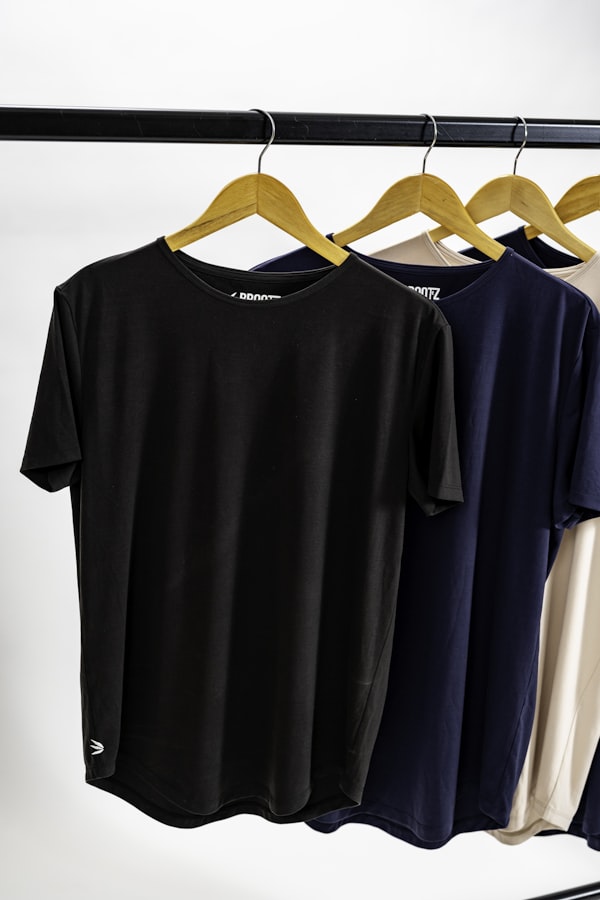
A sports t-shirt is not an ordinary t-shirt in a different colour. It is a functional product measured by how it performs: how much it absorbs, how fast it dries, how well it breathes, and how well it holds its shape after fifty washes. Most first-time buyers of sportswear buy on appearance and discover the difference in use.

Why does polyester dominate over cotton in sport?

Cotton absorbs sweat and holds it inside the fibre, so the garment becomes heavy and wet, clings to the body, and chills the wearer unhelpfully once effort stops. Polyester barely absorbs water into the fibre at all; it moves it to the surface where it evaporates. That is the function marketed as moisture-wicking, and it is not an added substance but a structural property of the fibre, reinforced by chemical finishing and by the knit design.

Common sports t-shirt fabrics

  • Polyester interlock: a smooth closed surface with an appearance close to cotton. The most used fabric for team shirts, because it takes sublimation printing perfectly.
  • Polyester mesh: visible openings that increase ventilation, used in high-sweat panels or as a whole garment in hot climates.
  • Polyester with elastane: adding 5% to 10% elastane gives four-way stretch, essential for close-fitting garments.
  • Polyester-cotton blend: balances a natural hand against performance, a good choice for a sports tee also worn outside training.
  • Recycled polyester: performance is effectively identical to virgin polyester, and it serves brands selling a sustainability story.

Suitable weights

The practical range for a sports t-shirt is 120 to 160 grams per square metre, lighter than a cotton tee because the function demands lightness and fast drying. Below 120 grams the fabric becomes semi-transparent, which shows in pale colours. Above 170 grams the shirt loses part of its athletic advantage and starts behaving like an ordinary tee.

Functional finishes

Some finishes must be requested explicitly and do not come by default: an anti-odour finish that limits the bacteria causing smell, a UV-protective finish for outdoor garments, and an anti-pilling finish that keeps the surface clean. Each adds cost, and each should be named in the contract together with the test standard it will be measured against; otherwise it is a marketing claim that cannot be verified.

Printing on performance fabrics

Sublimation is the standard method for light polyester, because it bonds inside the fibre so it cannot be felt, cannot crack and does not block ventilation, and it allows full-garment coverage with numbers, names and sponsors. On dark polyester sublimation does not work, and the alternatives are DTF or heat-transfer vinyl for numbers. Avoid heavy screen printing over large areas on sportswear, because it seals the fabric and cancels its function.

Frequently asked questions

Does polyester hold odour? More than cotton, which is why an anti-odour finish is requested on serious orders.

What is the minimum for team shirts? Usually 50 to 100 pieces per design when using sublimation, because it carries no setup cost.

Can each player have a different name and number? Yes, and that is one of the main advantages of sublimation and DTF, at little extra cost.

How much does polyester shrink? Usually under one per cent, which is one of its core advantages over cotton.

We supply wholesale sports t-shirts in functional fabrics and a range of weights, with sublimation printing and per-player names and numbers.

More articles
Reordering and scaling: from five hundred pieces to ten thousand
Read the article →
Fabric testing and lab reports: what to request and how to read them
Read the article →
What gets checked before the container leaves the factory?
Read the article →
What does it cost to start a t-shirt brand? A realistic line-by-line budget
Read the article →
How is your true cost per piece calculated?
Read the article →
Embroidery or printing? How to choose the right method for your logo
Read the article →
A guide to fabric weight: what does GSM actually mean?
Read the article →
Common t-shirt defects and the AQL inspection standard
Read the article →
Twelve mistakes new t-shirt importers make
Read the article →
Sustainability in t-shirt manufacturing: what the certifications actually mean
Read the article →
T-shirt production timeline: how long each stage takes and why orders slip
Read the article →
Customs and HS codes for t-shirts imported from China
Read the article →
Safe payment terms when importing from China
Read the article →
Export packaging for t-shirts: bags, cartons, labels and shipping volume
Read the article →
T-shirt labels and care tags: what is mandatory and what is optional
Read the article →
Dyeing and colour matching: Pantone, dye lots and colour fastness
Read the article →
Cotton grades and origins: Pima, Supima, Egyptian and standard cotton
Read the article →
Workwear and uniform t-shirts: durability, customisation and reordering
Read the article →
Wholesale kids t-shirt manufacturing: safety, sizing and standards
Read the article →
Polo shirt manufacturing in China: pique, collars, buttons and the full specification
Read the article →
The oversized t-shirt: fit, fabric, sizing and how to order it from China
Read the article →
A worked example: the cost of 1,000 t-shirts from factory to your warehouse
Read the article →
Where are t-shirts made in China? Guangzhou, Yiwu, Dongguan and Shenzhen
Read the article →
Promotional and event t-shirts: how to plan a wholesale order that works
Read the article →
From sample to production: t-shirt sample types and their timeline
Read the article →
How to verify a Chinese t-shirt factory before you pay
Read the article →
T-shirt sizing and fit: Asian, European and US size charts explained
Read the article →
Shipping t-shirts from China: sea, air, Incoterms and customs
Read the article →
How to build your own private-label t-shirt brand from China
Read the article →
T-shirt printing methods compared: screen, DTG, DTF, sublimation and embroidery
Read the article →
T-shirt fabric types: cotton, polyester and blends, and how to choose
Read the article →
How to import t-shirts from China: a complete step-by-step guide
Read the article →

Everything you need in t-shirts, from one source

Fabric, fit and sizing, printing and embroidery, labelling and packing, and shipping to your port.

Request a quote

This website is a service of:

Guangzhou Alshumul Trade Consulting Co., Ltd.
广州睿全贸易咨询有限公司

Unified Social Credit Code (business registration number)
91440106MAKJR3AP46
Registered in
Tianhe District, Guangzhou, Guangdong, P.R. China
Phone
+86 177 0200 0155
Address
广州市天河区林和中路188号附楼8楼812-B99室
Office 812-B99, 8th Floor, Annex Building, No. 188 Linhe Middle Road, Tianhe District, Guangzhou City, Guangdong Province, China

Registration can be verified through National Enterprise Credit Information Publicity System