A worked example: the cost of 1,000 t-shirts from factory to your warehouse
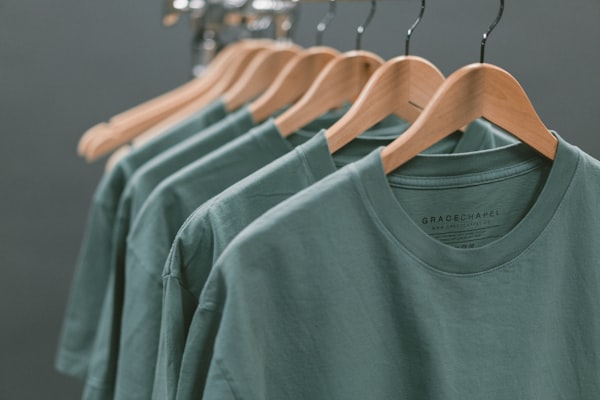
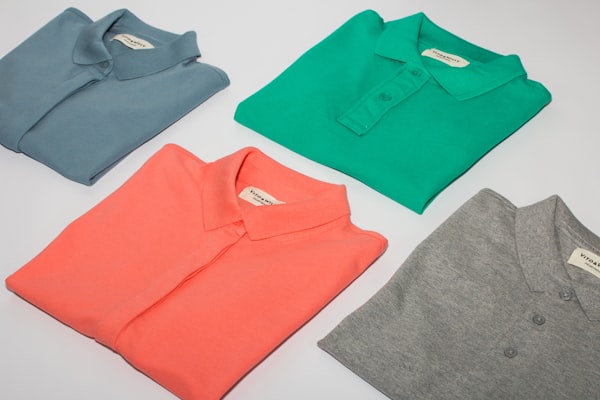
Numbers explain this better than description. Take a typical order: 1,000 combed cotton t-shirts at 180 grams, in two colours, with a two-colour screen print on the chest, a woven neck label and an individual poly bag per piece. We will walk through every line in the order it actually appears.
Line one: the factory unit price
This is the number the factory quotes, and it covers fabric, cutting, sewing, pressing and internal inspection. Fabric alone is typically 55% to 65% of it, with labour making up the rest. That is why dropping the fabric weight from 180 to 160 grams moves the unit price noticeably, while changing stitch counts or sewing details barely moves it at all.
Line two: printing
Always quoted separately, and it has two parts: a fixed setup cost paid once per colour to prepare the screens, then a running cost per piece. Across 1,000 pieces the setup divides by a thousand and becomes very small per unit. On an order of only 100 pieces that same setup becomes a heavy burden on every piece. This is the mechanism by which quantity makes the price fall.
Line three: labels and packaging
A woven label carries its own minimum, usually 500 to 1,000 pieces, and its unit price falls sharply with quantity. It therefore makes sense on a first order to buy enough labels for three orders: labels do not spoil in storage, and buying small quantities later will not get the same price. Add the size label, the hang tag, the individual bag and the export carton. Together these lines usually account for 5% to 8% of the cost.
Line four: inland transport and export clearance in China
Moving the goods from factory to port plus clearance charges. This is a near-fixed figure that does not scale with quantity, so its share per piece falls as the order grows.
Line five: sea freight
Charged by cubic metre, not by kilogram. A thousand folded, bagged t-shirts occupy roughly one and a half to two cubic metres. Because that falls short of a full container, it ships as consolidated cargo at a higher rate per cubic metre. This is where flat folding and a standardised carton size matter: every ten per cent saved in volume is a ten per cent discount straight off this line.
Line six: duty and clearance at your end
This varies enormously between markets: it may be zero under a free trade agreement, or exceed twenty per cent of value. This single line can overturn the economics of an order, and it must be confirmed before signing rather than on arrival.
Line seven: the lines everyone forgets
- Samples and their air freight: paid once, often deducted from the order.
- Pre-shipment inspection: the fee for one working day.
- Insurance: a small percentage of value.
- The cost of money: the deposit is paid two months before the goods arrive, and that is tied-up capital with a real cost.
- Allowance for defects: budget one to three per cent that will not sell at full price.
Where can you genuinely save?
In order: cut the number of colours before you cut the quantity; spread the setup cost over a larger run; ask for flat folding and standardise the carton size; and combine models into one shipment. Never save on fabric weight if the product will sell under your name, because the difference is felt in the customer's hand at first touch.
Frequently asked questions
Why do two quotes for the same t-shirt differ? Usually because it is not the same t-shirt: a different weight, a different yarn, or a different delivery term.
Should I ask for FOB or DDP? Always compare on FOB, and ask for DDP on a first order if you want a final figure with no surprises.
We send you a full line-by-line cost breakdown before you commit to any order.
More articles